09.23.26
C.H. Robinson’s $604 Million Case: What Trucking Businesses Should Know
A freight broker hires an independent motor carrier. The carrier has a Satisfactory FMCSA safety rating. A serious crash happens.
Can the broker still be held responsible?
A Dallas County jury recently said yes.
What Happened?
On July 23, 2026, a jury returned a $604 million advisory verdict in Lipe v. Lupus Superior, LLC, et al., a case involving freight broker C.H. Robinson, motor carrier Lupus Superior, and its driver.
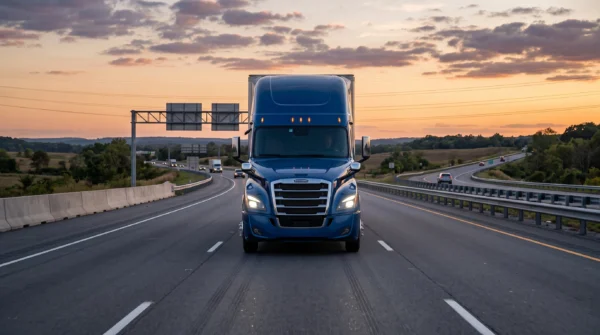
The case arose from a March 2021 crash on Interstate 20 in Mississippi. A Lupus Superior tractor-trailer struck stopped traffic, leading to a multi-vehicle crash and fire. Three people died and others were injured.
C.H. Robinson had arranged the load and selected Lupus Superior as the motor carrier.
The plaintiffs argued that C.H. Robinson should not have selected the carrier and that the broker exercised enough control over the shipment to share responsibility for what happened.
Why Could C.H. Robinson Be Held Responsible?
The jury found that the truck driver could be treated as a “borrowed employee” of C.H. Robinson.
That legal term needs some explanation.
Normally, a freight broker arranges transportation while the motor carrier controls its own drivers. But if a company exercises enough control over another company’s worker, a court can sometimes treat that worker as a borrowed employee.
If that finding stands, C.H. Robinson could be held legally responsible for the driver’s actions as well as its own share of fault. The finding could potentially expose it to the entire $604 million verdict under joint-and-several liability rules.
What About the Carrier’s Satisfactory FMCSA Rating?
This may be the most important part of the case for everyday freight brokers.
C.H. Robinson says Lupus Superior had a Satisfactory FMCSA safety rating and had successfully completed nearly 270 loads for its customers before the accident.
But the plaintiffs looked beyond that rating.
They presented evidence that Lupus Superior had been above FMCSA intervention thresholds in the Unsafe Driving and Hours-of-Service Compliance categories for an extended period before the crash.
The lesson is not that an FMCSA Satisfactory rating suddenly means nothing.
It means that a broker may not always be able to point to one federal rating and consider the carrier-selection question closed.
After a major accident, lawyers may examine what other safety information was available and what the broker did with it.
Why This Matters for Trucking Insurance
The verdict makes broker liability much more than a legal issue. It is also an insurance issue.
C.H. Robinson disclosed that, for the period involved in the accident, it carried $155 million in liability and excess insurance per occurrence, subject to a $5 million deductible. Compare that with a verdict of $604 million, and the importance of insurance limits becomes obvious.
For freight brokers, underwriters may increasingly want to understand:
- How carriers are vetted
- Which safety information is reviewed
- Whether those checks are documented
- How broker-carrier contracts define responsibilities
- How much operational control the broker exercises
- What liability and excess limits are in place
This does not mean one verdict will automatically raise every broker’s premium.
But a case of this size can influence how insurers view broker liability, how much coverage they are willing to offer, and what information they require before underwriting the risk.
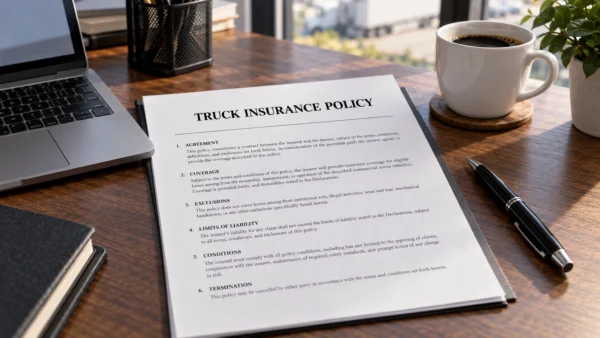
It also reinforces why Truck Broker Liability or Contingent Auto Liability should not be confused with cargo coverage. A cargo policy protects a different exposure. Brokers need to know which part of their insurance program is intended to respond when they are accused of contributing to a highway accident.
What Does It Mean for Motor Carriers and Owner-Operators?
The motor carrier and driver still received most of the fault in the verdict. Their own safety practices, insurance, and operating decisions remain central after an accident.
At the same time, brokers now have another reason to look more carefully at the carriers they hire.
That can mean greater attention to FMCSA data, inspection history, hours-of-service issues, insurance status, authority, and other safety information.
For a well-run carrier, keeping those records accurate is not just a compliance issue. It can affect whether brokers are comfortable doing business with you.
The $604 Million Verdict Is Not Final
The July verdict was advisory and remains subject to post-trial proceedings. As of September 8, 2026, the Dallas County judge had not yet entered a final judgment. C.H. Robinson has said it intends to appeal once that process allows it.
The amount, the liability findings, or both could still change.
But the insurance lesson already matters.
A broker’s risk does not end when the load is handed to an independent carrier. And a motor carrier’s safety record can affect more than its own insurance — it can now become part of the broker’s liability picture too.
At Truckers National Insurance, we help transportation businesses review coverage based on the way they actually operate and understand where liability gaps may exist before a claim exposes them.